• EVENTS
    • 2014 CALENDAR
    • FESTIVALS
    • HOLIDAYS
      • NEW YEARS
    • SPECIAL EVENTS
    • NIGHTLIFE
    • NATURE
    • HEALTH
    • RELIGION
    • SPORTS
    • WORKSHOPS
  • CULTURE
    • DANCE
    • FILM & VIDEO
      • MOVIE LISTINGS
      • MOVIES
    • ART
      • ART GALLERIES
      • COMPETITION
      • Graffiti
    • THEATER
    • MUSIC
      • CONCERTS
      • RAVES
      • MUSICIANS
  • FEATURES
    • TOUR REVIEWS
    • NEWS
      • Swine Flu
    • HISTORY
    • INTERVIEWS
    • The Expat Story
    • HUMOR
  • GAY SCENE
    • GAY PV MAP
    • GAY GUIDES
    • GAY FORUMS
    • GAY CLUBS
  • GUIDES
    • RED ZONE TOUR
    • BAR GUIDE
    • RESTAURANT GUIDES
    • Communication – Phones
    • Maps
    • Vallarta Mercados
    • FOOD & DRINK
    • MEDIA
      • FORUMS
      • BLOGS
      • PUBLICATIONS
      • RADIO / TV
      • WEBSITES
  • MEXICAN CULTURE
    • TRADITIONS
    • HOLIDAYS
    • TRADITIONAL EVENTS
    • PERFORMANCE

Puerto Vallarta Scene

Puerto Vallarta Information & Events

  • Behind the Scene
  • Maps
    • Night Bus Routes
    • GAY PV MAP
  • 2015 Holidays
  • Weather
  • Vallarta Webcams

La Reina De Las Fiestas Patrias

A contest for the Queen of the Fiestas (the Grito and Independence Day celebrations) is being held for girls between 15 and 20 years old who have been born in or have lived in Puerto Vallarta for 5 years. Prizes include $15,000 pesos for first place, $10,000 for second and $5,000 for third.

Apply at Subdirección de Arte y Cultura, Aquiles Serdán No. 437, interior 38, from Monday to Friday, 10am to 2 pm. For more information: tel. 22 300 95 or 11 3 01 07

Entries are open to the public and will be closed Thursday, August 28, 2008, at 2pm.

la reina de las fiestas patrias vallarta

2nd Encuentro Internacional Vallartense de Medicina Natural, Tradicional y Alternativa

FINAL DAY, SUNDAY, NOVEMBER 2

17 Dias de Magia, Curaciones y Conocimiento

This is the second Encuentro Internacional Vallartense de Medicina Natural, Tradicional y Alternativa in Puerto Vallarta. This year, 2008, it will be held from 17th of October to the 2nd of November in Parque Hidalgo. Included will be traditional ceremonies daily and many booths of alternative medical practitioners, food and traditional crafts.

The opening ceremony for the event is at 10 am, Friday, October 17.

SLIDESHOW

FOR MORE INFORMATION:
EMAIL: carcolvallartense (at) hotmail.com
EMAIL: detrasdelapista_7 (at) hotmail.com
TEL: (044) 322 121 64 21
TEL: (044) 322 146 08 05
1st Encuentro Internacional Vallartense de Medicina, Feb, 2008

[Read more…]

Maximo Alfonso Lopez and The Group Folkra » Mesoamérican Music

Maximo Alfonso Lopez and The Group Folkra – Mesoamérica.
Cuale Cultural Center, 8:30pm, Saturday, July 26, Free.

On July 26 at 8:30 pm, there will be a presentation of Mesoamerica music with “Maximo Alfonso” who specializes in ethnic Mexican music, from more than 20 years ago, and the Huichol group, “Las Lopez,” three musicians from birth to interpret regional music accompanied by his guitar, bass and violin, and also introduce the group Folkra with Latin American instruments. It is directed by Professor Nestor Villasenor of the Cuale Cultural Center.

Máximo Alfonso, Los López y El Grupo Folkra – Mesoamérica.

Representando a Mesoamérica participará “Máximo Alfonso” que se especializa en música étnica mexicana, desde hace más de 20 años; el grupo huichol “Los López”, tres músicos de nacimiento que interpretan música regional acompañados de su guitarra, bajo y violín; así también se presentará el grupo Folkra de instrumentos latinoamericanos que dirige el profesor Nestor Villaseñor del Centro Cultural Cuale.

Aztec Death Whistles

MEXICO CITY, Mexico (AP) — Scientists were fascinated by the ghostly find: a human skeleton buried in an Aztec temple with a clay, skull-shaped whistle in each bony hand.

Roberto Velazquez has devoted his career to recreating the forgotten sounds of his distant ancestors.

Aztec Deth Whistle
But no one blew into the noisemakers for nearly 15 years. When someone finally did, the shrill, windy screech made the spine tingle.

If death had a sound, this was it.

Roberto Velazquez believes the Aztecs played this mournful wail from the so-called Whistles of Death before they were sacrificed to the gods.

The 66-year-old mechanical engineer has devoted his career to recreating the sounds of his pre-Columbian ancestors, producing hundreds of replicas of whistles, flutes and wind instruments unearthed in Mexico’s ruins.

For years, many archaeologists who uncovered ancient noisemakers dismissed them as toys. Museums relegated them to warehouses. But while most studies and exhibits of ancient cultures focus on how they looked, Velazquez said the noisemakers provide a rare glimpse into how they sounded.

Hear some of the spine-tingling sounds of the ancient Aztecs:
VIDEO AND SOUND

“We’ve been looking at our ancient culture as if they were deaf and mute,” he said. “But I think all of this is tied closely to what they did, how they thought.”

Velazquez is part of a growing field of study that includes archaeologists, musicians and historians. Medical doctors are interested too, believing the Aztecs may have used sound to treat illnesses.

Noisemakers made of clay, turkey feathers, sugar cane, frog skins and other natural materials were an integral part of pre-Columbian life, found at nearly every Mayan site.

The Aztecs sounded the low, foghorn hum of conch shells at the start of ceremonies and possibly during wars to communicate strategies. Hunters likely used animal-shaped ocarinas to produce throaty grunts that lured deer.

The modern-day archaeologists who came up with the term Whistles of Death believe they were meant to help the deceased journey into the underworld, while tribes are said to have emitted terrifying sounds to fend off enemies, much like high-tech crowd-control devices available today.

Experts also believe pre-Columbian tribes used some of the instruments to send the human brain into a dream state and treat certain illnesses. The ancient whistles could guide research into how rhythmic sounds alter heart rates and states of consciousness.

Among Velazquez’s replicas are those that emit a strange cacophony so strong that their frequency nears the maximum range of human hearing.

Chronicles by Spanish priests from the 1500s described the Aztec and Mayan sounds as sad and doleful, although these may have been only what was played in their presence.

“My experience is that at least some pre-Hispanic sounds are more destructive than positive, others are highly trance-evocative,” said Arnd Adje Both, an expert in pre-Hispanic music archaeology who was the first to blow the Whistles of Death found in the Aztec skeleton’s hands. “Surely, sounds were used in all kind of cults, such as sacrificial ones, but also in healing ceremonies.”

Sounds still play an important role in Mexican society. A cow bell announces the arrival of the garbage truck outside Mexico City homes. A trilling, tuneless flute heralds the knife sharpener’s arrival. A whistle emitting cat meows says the lottery ticket seller is here.

But pre-Columbian instruments often end up in a warehouse, Velazquez said, “and I’m talking about museums around the world doing this, not just here.”

That’s changing, said Tomas Barrientos, director of the archeology department at Del Valle University of Guatemala.

“Ten years ago, nothing was known about this,” he said. “But with the opening up of museum collections and people’s private collections, it’s an area of research that is growing in importance.”

Velazquez meticulously researches each noisemaker before replicating it. He travels across Mexico to examine newly unearthed wind instruments, some dating back to 400 B.C. and shaped like animals or deities. He studies reliefs and scans 500-year-old Spanish chronicles.

But making replicas is only part of the work. Then he has to figure out how to play them. He’ll blow into some holes and plug others, or press the instrument to his lips and flutter his tongue. Sometimes he puts the noisemaker inside his mouth and blows, fluctuating the air from his lungs.

He experimented with one frog-shaped whistle for a year before discovering its inner croak.

Renowned archaeologist Paul Healy, who made an important discovery of Mayan instruments in Belize in the 1980s, said many of the originals still work.

“A couple of these instruments we found were broken, which was great because we could actually see the construction of them, the actual technology of building a sound chamber out of paper-thin clay,” he said.

Still, their exact sounds will likely remain a mystery.

“When you blow into them, you still can get notes from them, so you could figure out what the range was,” Healy said. “But what we don’t have is sheet music to give us a more accurate picture of what it sounded like.”

ORIGINAL STORY

Queen of the Third Age Contest – 2008

la Reina de la Tercera Edad

Reina de la Tercera EdadTo promote the improvement of the quality of life of the population aged 60 and over, with activities recreational, occupational therapy and paid, with the aim of offering real alternatives that will enable them to raise their self-esteem and encourage self-sufficiency, thereby facilitating their development, the Cultural Department of Puerto Vallarta is staging a contest for the Queen of the Third Age on April 10 at 6pm in the Los Arcos Amphitheater. Free.
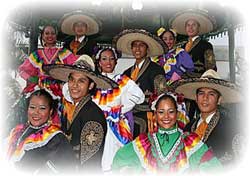
Grupo Folklórico Vallarta Azteca » March 15

Grupo Folklorico
The Grupo Folklorico Vallarta Azteca had its beginnings in the year 1998 as a dance workshop the Centre Universitaire de la Costa. It has progressed through many changes to the performance group dancing Saturday, March 15, at the Los Arcos Amphitheater at 8pm.

LOCATION MAP

« Previous Page
Next Page »
Find more about Weather in Puerto Vallarta, MX

the news
webcams
BAR GUIDE
Vallarta scene forum
evita el exceso

Advertisements

cafe mordida

SEPEPSA Puerto Vallarta security service

250x250 Square Sidebar
250x90 Sidebar Banner

Official Vallarta Websites:

Instituto Vallartense de Cultura

OAATRE Puerto Vallarta Tourist Assistance

 Puerto Vallarta government website

Visit Puerto Vallarta