• EVENTS
    • 2014 CALENDAR
    • FESTIVALS
    • HOLIDAYS
      • NEW YEARS
    • SPECIAL EVENTS
    • NIGHTLIFE
    • NATURE
    • HEALTH
    • RELIGION
    • SPORTS
    • WORKSHOPS
  • CULTURE
    • DANCE
    • FILM & VIDEO
      • MOVIE LISTINGS
      • MOVIES
    • ART
      • ART GALLERIES
      • COMPETITION
      • Graffiti
    • THEATER
    • MUSIC
      • CONCERTS
      • RAVES
      • MUSICIANS
  • FEATURES
    • TOUR REVIEWS
    • NEWS
      • Swine Flu
    • HISTORY
    • INTERVIEWS
    • The Expat Story
    • HUMOR
  • GAY SCENE
    • GAY PV MAP
    • GAY GUIDES
    • GAY FORUMS
    • GAY CLUBS
  • GUIDES
    • RED ZONE TOUR
    • BAR GUIDE
    • RESTAURANT GUIDES
    • Communication – Phones
    • Maps
    • Vallarta Mercados
    • FOOD & DRINK
    • MEDIA
      • FORUMS
      • BLOGS
      • PUBLICATIONS
      • RADIO / TV
      • WEBSITES
  • MEXICAN CULTURE
    • TRADITIONS
    • HOLIDAYS
    • TRADITIONAL EVENTS
    • PERFORMANCE

Puerto Vallarta Scene

Puerto Vallarta Information & Events

  • Behind the Scene
  • Maps
    • Night Bus Routes
    • GAY PV MAP
  • 2015 Holidays
  • Weather
  • Vallarta Webcams

Pata Salada-ization – Social Networking in Vallarta

The Internet as a Social Introduction to Puerto Vallarta

Pata Salada is a colloquial term used to identify people who live in Puerto Vallarta. Literally it means “salt leg.”

One of the first hurdles facing many people visiting or moving from one culture to another is a lack of familiar reference points or a diminishing of social comfort zones. To some people, these are the benefits of international travel but to others they all too often are the main drawbacks.
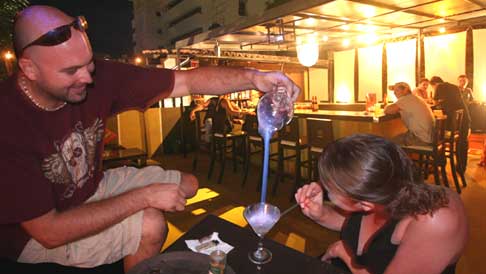
Efforts at reestablishing familiar and comfortable relationships in strange surroundings are the inspirations for social clubs and organizations. Puerto Vallarta has many such organizations and groups and, in the computer age, many of these are initiated and maintained on the internet. Often these seemingly random collections of expats and tourists take on an identity of their own.

A brief survey of local organizations finds internet bulletin boards, social clubs, charitable organizations, common-interest clubs and self-help groups.

The most physically visible of these organizations to a newcomer to this area, in particular, are the charitable organizations. There are a multitude of children’s aid organizations, poverty and scholarship assistance programs, animal rescue groups, religious charity outreaches, ecology clubs and government assisted programs.

A brief glance at any of the local English speaking newspapers, the PV Mirror, the Vallarta Tribune, Vallarta today or current events websites like Banderas News and the PVScene will instantly provide a broad overview of the more popular organizations and their activities. Even a few hours working with one of these groups can be an eye-opener, broadening an individual’s comfort zone.

There are broad-based social clubs here such as the International Friendship Club, which has regular meetings, events and charitable programs. There are umbrella organizations like PEACE which operate direct outreach animal welfare and poverty assistance and Becas which holds events to provide scholarships. Similar, but more individually focused, are the common interest clubs such as the PV Writer’s Club or Mundo Ceibo, a bicycle/environmental organization, or the FidoClub, an in-home dining club. The new Vallarta Garden Club or SETAC, a community center/health and social organization for GLBT individuals add to this list. On a more organized and professional scale, the Cuale Cultural Center offers performances and classes in the arts, providing very popular artistic/theatrical/musical venues and activities for the area and the Los Mangos Biblioteca, another umbrella organization here in Vallarta, offers a wealth of inexpensive programs and activities that often lead to community integration and personal fulfillment.

On the internet is a plethora of widely varied Bulletin Boards or Forums. These range from the totally commercial TripAdvisor and PuertoVallarta.net forums to individually owned and operated general interest forums like AllVallarta.com, OurVallarta.com, VallartaScene.com, the Puerto Vallarta Old Town South Side Forum (and its offshoot, the Puerto Vallarta Gay Travel Forum). There are others but these are, by far, the most popular internet forums in Puerto Vallarta at this time.

On these forums any reasonably internet-savvy person can find information, recommendations and social activities enough to outlast any stay here. The information and “recommendations” are sometimes slanted, according to the commercial orientations of the particular forum and posters but, especially on the privately owned forums, there is usually enough variety of response to generate fairly accurate impressions. Some of these forums also offer “meet-ups” or sponsored activities like horseback riding or short tours or even bar crawls. Three of the forums (OurVallarta, VallartaScene.com and Expats in Vallarta) have regular meetings at local restaurants to provide introductions and to stimulate socializing.

Each of these forums has its own personality and it’s best to shop around if interested. Some are quite placid and some quite raucous. Some are adult-oriented and some family-values oriented. One of the more popular forums is run by a bar owner, one by a tour promoter, one by a restaurant critic and one by a former underground magazine publisher so the content and regular posters will vary considerably.

Similar to the forums are the popular social networking websites like facebook and Twitter where many locals and visitors digitally interact. These websites should probably more appropriately be called free business advertising networking websites (with humor, good grace and a touch of apple pie) because they are dominated now by commercial interests but frequented by people hoping for something more personal.

Beautiful scenery is nice but it’s more often the people and exchanges with them that provide the most memorable aspects of any vacation. All of the organizations and activities mentioned here provide these exchanges, and most at a very modest cost. Tourist guide books are useful but they are often outdated and financially influenced. People you meet at local charity and social events are much easier to read and to experience.

A Case for Minimalism

Traveling is my life.

I travel for adventure and for business. I travel for exposure to new views and for hopes of finding those ever more elusive “greener pastures” around the next corner.

As I have traveled over the years, a curious thing has happened to my traveling habits. My suitcases have gotten smaller and my “necessities” have gotten fewer.

Light TravelWhen I first started hitting the airways I tried to pack every imaginable item I might ever need away from home. I left nothing to chance, nothing that could break my daily routines or conventions. I carried coffee makers, clothing for every situation, a cornucopia of preventative medications and even foods that would satisfy all insecurities and home-sickness cravings. I filled every luggage limit.

Slowly I started leaving things behind until now I travel with only a backpack (moderately sized and “carry on” for all airlines), a small laptop, a camera and basic items like a toothbrush and a couple changes of clothes. I also bring my passport, drivers license and a couple of ATM cards.

The only item I can’t carryon (that I wish I could) with this method is a Swiss Army knife. I haven’t found a satisfactory solution to only using carry on luggage and traveling with this multipurpose, extremely useful gadget.

The philosophy behind minimalism is to experience as fully as possible the chosen destinations. Of course, the minimalism philosphy won’t work if you are traveling with children or if your travel is strictly for relaxation. And it won’t work if you are traveling solely for business (more extensive attire is usually mandatory in this case). I can’t imagine traveling long distances with very small children. They gain nothing by it and you lose a lot.

I love arriving in a new town and eating the local food and flowing with the existing social scene(s). If I travel to a country with a language I don’t know, I either take a small paperback dictionary/phrase book or, in the case of Mexico where I do know the simple phrases but often want a more detailed language experience, an electronic dictionary.

In any country as a tourist it is usually very easy cover the basics of life.

Food is automatic for me: I eat what is available. People such as vegetarians with food prejudices have a difficult time living outside of their protected environments. I am a carnivore and like to experience new types of food so this basic need is covered with gusto.

Health is another basic concern. Do I worry about getting food and water born illnesses in new places? No, but I carry a dose of cipro and an anti-diarrhea drug as a backup. Only once in many years have I had to use the cipro and that was in Thailand.

Water, also, is easy to cover: I usually drink the local beer. It’s always safe. Hot tea and coffee are also good choices.

For self-medication I also carry aspirin and naproxin (because I’m old and achy). Carrying prescription medications is sometimes necessary but make sure that you have the documentation to back them up as some drugs legal some places are not legal in others. If you’re really heading into the outback, some toilet paper and pre-moistened hand wipes might be indicated. You won’t need toilet paper for travel to most cities.

Because I wear eyeglasses, I take an extra pair along with a small eyeglass repair kit.

Clothing is something that I always get wrong so I travel with very little. I carry 3 sets of underwear, an extra pair of pants, a couple of shirts and a swim suit. If possible, I layer my travel clothing but this does not work well in tropical countries. If I stay in a place for more than a few days, I buy what I need locally and this can always be done very economically, especially in tourist areas. Tourists will always look like tourists so I don’t bother trying to fit in, fashion-wise. For shoes I have sandals and light hiking boots.

Some people take books on trips but I prefer to get my diversion from real life, not from the recorded.

For contact with the outside world, I have a small netbook computer with wireless (tho I also carry a short network cable for those places not wireless). I have Skype set up on the computer for phone calls. It weighs nothing, can’t get lost and can phone anywhere very inexpensively and easily. Most travel destinations have internet cafes. Many hotels have internet access. The old days of incommunicado travel are gone.

Miscellaneous items that I often carry are a small flashlight and a collapsible umbrella. The flashlight I use often but the umbrella rarely; I may start leaving it out of the backpack.

Comments welcome.

Free Internet Hot Spots

Take your laptop to the Town Plaza (at the Presidencia) and you can access free internet at HOT-SPOT AYUNTAMIENTO. This is the first phase of an effort to make all of Vallarta internet accessible.

No password is needed and this service is supposed to be 24 hours a day. Some pornographic and violent websites will be blocked.

If you have questions about this contact the Subdirección de Tecnologías de la Información at (322) 226 80 80 ext. 333 or email TI @ puertovallarta.gob.mx.

Puerto Vallarta 1963

January 21, 1963
Hideaway In Mexico’s Sun

Not every Mexican fishing village dreams of growing up and becoming another Acapulco. The natives, and the gringos who already have found it, will take Puerto Vallarta just exactly as it is

by Richard Oulahan

There Are No Telephones in P.V. and the Sea Is like Champagne

The flight from Guadalajara is enough to make the most blasé traveler sit up and tighten his seat belt. The Sierra Madre rises menacingly to crests of 9,000 feet, their waves broken by bottomless barrancas. An aging DC-6 skims skillfully over the mountaintops, then dives over a foaming jungle, like a tiny surfboard aimed at the new Puerto Vallarta airport. Climbing shakily from the plane, the tourist can immediately see why Puerto Vallarta has kept its pristine isolation for centuries: high mountains embrace the yawning Bahia de Banderas, walling the tiny port completely from the rest of Mexico. The slopes are densely covered with the selva, the jungle that creeps right up to the backdoors of town. Until the arrival of the first commercial aircraft four years ago, Puerto Vallarta—or P.V., as the visitor soon begins to call it—was a Latin-American Shangri-La. It still is little-known, but the 20th century is inexorably seeping in, and it is only a question of time before Vallarta goes the way of all such salubrious places in the sun.

Puerto Vallarta was originally called Las Peñas—The Stones. The Pacific coast of Mexico is rocky, and the town has a solid, carved look about it, softened by the abundant trees and flowers, the pastel buildings and the champagne sea at its front doorstep. The streets are cobbled, the sidewalks narrow and the weather sublime (70f. mean average).

There are no telephones in Vallarta; the only link with the outside is the cable office. But nobody needs a telephone, señor: everyone has a mozo, or messenger boy, close at hand—a fleet young Jaliscan who will gladly run up the hill to tell Mary to come on down to the beach, or go fetch another tequila sour from the bar. On Sunday evenings the young people of the town make the traditional promenade around the plaza, the girls circling clockwise, the boys counter-clockwise. On nights of the full moon Vallarta throbs to a guitar—or rocks to the omnipresent Wurlitzer.

Forty years ago, during the Mexican Revolution, the little fishing village was the scene of bloody fighting; the principal beach, Playa de Los Muertos, was named for the men who died there, and the town was patriotically renamed for Ignacio Vallarta, Chief Justice of the Mexican Supreme Court during the administration of the great Benito Juarez. The long siesta lasted until seven or eight years ago, when avant-garde artists and vagabonds discovered the place, recognized its fresh charm, and quietly moved in. A dozen small and studiedly simple hotels sprouted along the beach; chalets for the rich gringos and richer Mexicans climbed the hill above the river; restaurants, nightclubs, chic shops—even a supermarket—appeared. P.V. boomed.

“The town is divided into two parts, senor,” says German Gomez, an amiable Vallartan, “this side of the river and the other side of the river.” On this side of the Cuale river lies the old town, five blocks wide from sea to selva. On the other side, across a humped bridge, is Los Muertos beach. Five years ago it was an empty strand. Today, it has everything but a boardwalk. But the footloose tourist still can lie on a mat in the sun or laze in the warm, clear water (see cover) in all the solitude he desires.

Vallarta offers almost unlimited opportunities for the sportsman. The bay is leaping with fish. The Tres Marietas, three tiny islets in the mouth of the bay, are ideal, for skin-diving. In the early morning, when the bay is tranquil, water skiers sally forth like dragonflies. At sunset the local livery men bathe their horses in the sea (preceding pages). Hunting safaris into the jungle are easily arranged (for details and other travel information sec page 41). There are daily whaleboat excursions to Yelapa and Quimixto, two celebrated waterfalls on the coast. On Sundays native Vallartans picnic at Las Amapas, a string of cozy coves where anyone can find his own private beach.

The wave of the future is already casting its spray on Vallarta. The ground has been broken for a 100-room hotel with tennis courts, air conditioning and, horror of horrors, telephones. All-weather autopistas will sluice through the mountains, the jungles and down the coast from California in a few short years. Jets are only months away. But for the moment Vallarta, as shown in this color portfolio, is as unspoiled—well, almost, senor—as it was in the days of Pancho Villa.

The bay is full of fish, the jungle full of game, the soft night full of music—and the iguana is a pushover for tasty hibiscus blossoms

GETTING THERE: The shallow bay will admit fairly large yachts. There is a special apron for private planes at the new airport. But most tourists have only one way of entry: Compana Mexicana de Aerovias’ daily DC-6 flights—in the morning from Mexico City (with a stop at Guadalajara) and in the afternoons from Los Angeles (via Mazatlan). STAYING THERE: There is a good selection of small hotels. Right on Los Muertos beach is the saffron-colored Tropicana, which has just opened a new ocean-front wing, and the brand-new Marsol, which has apartments with cooking facilities. The downtown Oceano is justly proud of its fine food, and mariachi bands gather each night in its patio. The Posada de la Selva (Jungle Inn) is a secluded cottage colony with a pleasant swimming pool underneath some of the biggest mango trees on earth. The Rosita is coral pink, convenient to downtown, with a brand-new pool. At the Playa de Oro, a rustic cottage colony on the airport road, guests are greeted by an affectionate baby boar, an ocelot kitten and an antic anteater. The Rio has a pleasant pool in its patio, and a Cinemascope view of the bay and mountains. Las Campanas is perched on a hill in the midst of dazzling tropical flowers. Other hotels are the Bucanero, Posada del Pedregal and Chula Vista. Prices at all hotels range from $5 to $9 a day, single, European plan, and $9.50 to $15 daily with meals. In the summer season rates are 10% lower.

FISHING: All manner of marine life inhabits the surrounding waters: marlin, sailfish, dolphin, red snapper, yellowtail and a score of others can be caught within the bay or just outside. Deep-sea fishing boats, equipped with tackle, bait and beer, are available on the waterfront. Mexicana Airlines has a fleet of three trim boats for charter. Rates are $50 a day. Smaller craft, including sailboats, are for hire at rates of $1.60 per hour and up. Surf casting is generally good in the coves south of town. A popular local sport is harpooning the huge (3,000 pounds) devilfish, or manta ray, that inhabits the bottom of the bay. Once speared from a native dugout canoe towed behind an outboard, the winged monsters are good for a thrilling ride and sometimes jump as high as 20 feet in the air. Jack Cawood, a one-time journalist who owns and operates the Playa de Oro Hotel, will arrange a manta ray hunt on request.

HUNTING: In the jungle there are jaguar, ocelot, deer, boar, ducks, turkeys and iguana, to name a few. (Iguanas, which can be cooked into a tasty ragout, with skin left over for shoes and belts, are best caught on the rocks, with rod and reel, baited with a tasty hibiscus blossom.) Angelo Gutierrez will arrange hunting expeditions into the selva at the rate of $8 per person a day.

HORSES: Next to the jeep, horses are the principal means of transportation around Vallarta. They are for hire everywhere in town, for a breezy canter down the beach, or a dreamy ride through the jungle trails under a canopy of palms, orchids and screaming parrots. Rates: 40 centavos an hour.

SHOPPING: The boutique thrives like the bougainvillea—a harbinger of creeping civilization. Nelly’s (see page 39) is the most stylish shop in town, with a branch on the beach. She also exports her resort clothes to New York’s Henri Bendel. Fun Clothes, on Los Muertos beach, has vivid and nutty muumuus, which are de rigueur for the chic turistas of Puerto Vallarta. Along Avenida Juarez there are shops that purvey fine products of gold, silver, leather and other native crafts at bargain prices.

DINING AND DANCING: The local cuisine—especially the seafood—is superior to the best in Acapulco. All of the hotels and a handful of good restaurants—Del Mar, Los Jardines, La Margarita and, on the beach, La Palapa—offer fine food at about $2 for dinner. Night life is limited, but lively. Some of the bar-restaurants have acts from Guadalajara, and the mariachi bands are all over the place. At La Palapa it is worth the price of a drink to watch the enthusiastic young aristos dancing the tweest.

Original article at:
http://sportsillustrated.cnn.com/vault/article/magazine/MAG1074441/index/index.htm

The Perla Negra in Puerto Vallarta

On February 13, 2010, a new tourist attraction, the galleon “Perla Negra” sailed into Banderas Bay to join a similar boat, the 20 year old “Marigalante.” The Perla Negra was constructed in Mazatlan over the last 2 years and is scheduled to have its official grand opening on November 27, 2010.

black-pearl

[youtube]http://www.youtube.com/watch?v=wS5sTwGl4x8[/youtube]

And, of course, the inspiration for the name:
[youtube]http://www.youtube.com/watch?v=0Z1XpfbuZOA[/youtube]

Touring Guadalajara

A Review: The 3 Day Shopping Tour of Guadalajara

by Rick Hepting
photos by Sarah Hepting
December 4-6, 2009

Guadalajara is a BIG city with a metropolitan population of approximately 5 million, plus or minus, depending on how many suburbs you include in the count. It is Mexico’s second largest city after D.F. This city sits on a high volcanic plateau at 1,600 metres (5,200 ft) elevation.

To say that Guadalajara is a cultural center is an understatement. The colonial construction of many of the older downtown buildings contrast sharply with the modern traditional “ramshackle” construction of the relatively newly emerging technical economy.

The most currently styled young professionals mix easily and fluidly with the dirtiest beggar. This is, of course, the condition of almost any modern metropolis but it’s worth mentioning to put the rest of this review in perspective.

I’m prejudiced. I love Guadalajara, its throbbing population and its sometimes enormous and glaring contradictions.

There are many ways to explore a new city and this is one. Although it’s billed as a shopping tour of the city, it is much, much more. The tour guide, Astrid van Dam was born in the Netherlands and is fluent in Dutch, English, Spanish and German. Since I am more limited, I can only verify her fluency in Spanish and English. What was more apparent to me than her linguistic skill is her youthful exuberance (she was born in 1975) and her European sense of reality. She has the broad view of culture and people without the often accompanying personal distance or disdain.

Her story of moving to Mexico when she was in her early 20s should explain it all: She and a friend threw a dart at a map and followed its lead. She liked where that adventure took her and settled in Puerto Vallarta, eventually earning her tour guide license and developing Superior Tours.

This tour included a bus ride from Vallarta to Guadalajara (and back) and 2 nights accommodations at the Centro Hotel Cervantes, an older hotel that had seen better days. It was ideally situated for this tour, being only a few blocks from the main square and major attractions and shopping areas. It was fine for the price.

The tour started with a pickup at central locations in downtown Vallarta and Bucerias at 8 am on a Friday. The bus was comfy and cold drinks (sodas and water) were available gratis throughout the trip. The bus ride is long and there’s no way to get around this basic fact, but the scenery is breathtaking and varied.

Astrid periodically talked about the culture and history of the places we passed and were going to visit as we traveled. The bus made rest stops along the way.

The first and only actual “tour” of this trip was at the Casa Herradura-Hacienda San Jose del Refugio Tequila Factory in Tequila. This place provides a stunning glimpse of the complexity of the history of inland Mexico. The tour is nothing like the “tequila tours” offered in Puerto Vallarta. Multiply those experiences by 100 and you get closer but you still don’t have any concept of the true nature and culture of tequila.

tequila rockinghorse

Herradura produces around 60,000 bottles of tequila a day. Everything is done on site from the initial water treatment to the bottling and labeling. Considering that this operation has been in existence at this location for about 140 years, seeing this traditional process integrated with modern equipment is a bit overwhelming. A large part of the hacienda is preserved as a museum and a larger part is devoted to producing an extremely large quantity of quality tequila. Unlike most tequila “tours” there is no pushing of the product. There is a small, hidden store but you have to look for the salespeople. Actually, the Herradura Hacienda, itself, is hidden and off the main road and you have to drive through some small-town Mexico back streets to get to it.

From Tequila the tour headed to the hotel in Centro. Check-in, of course, was a breeze, with everything arranged before arrival. Astrid runs a tight ship as far as the logistics are concerned and she is open and flexible on the personal level.

I should mention at this point that the tour I am describing has been changed a bit and anyone interested I would advise to go directly to Superior Tour’s Website for the current information. This tour was $150(US). The price has risen slightly and some of the destinations have changed.

After check in at the hotel and some time for freshening, Astrid led a walking tour to the Christmas holiday mercado in a nearby plaza. This was, more then anything, a getting-used-to the city walk, an ice-breaker, if you will.

I should mention here that Astrid’s tour of Guadalajara involves a lot of walking. Be prepared. No one complained about the quantity or speed, but this is no “hop-on a bus and gawk at the sites tour.”

After a bit of free time, a dinner was offered at at nearby restaurant, La Fonda de San Miguel, a very impressive old convent turned restaurant. The setting is magical but I thought the food only fair. Others disagreed with me about this meal, as anyone should with any review: There is no universal “best” or “worst.” People definitely have different tastes, likes and dislikes.

At the hotel, make sure you request an interior room if you value sleep. I requested a street-side room because I love to watch street life after I’m too tired to participate, and, in this case, that was a mistake because the main street by the hotel, Priscilliano Sánchez is a continuous traffic jam, with blaring horns and boom boxes, from 1 to 4 am. I don’t know why this happens but it’s very entertaining, combined with watching the quite theatrical hookers kitty-corner from the hotel, but it makes for a very disturbed sleep. People who had inside rooms said that they slept like babies.

The complimentary breakfast buffet at the Cervantes is more than adequate, with a fine variety of food and fresh juices. Some of the members of the tour are still debating the true nature of the fresh green juice (whatever this unusually colored juice was, it was good).

After breakfast we started walking on a tour of the Centro Historical District, including the Cathedral, the government building (housing some very impressive and not-to-be missed Jose Clement Orozco murals), and the lengthy Morelos street mall (pedestrian-only), leading up to the Mercado Libertad, one of the largest real mercados in Latin America. At 11:30 am we then boarded the bus and headed off to Tlaquepaque, a rather upscale shopping suburb of Guadalajara, not interesting to me but very interesting to others on the tour. My highlight of this part of the tour was seeing the arts and crafts museum (oh, if only these items were for sale…) and sitting in the plaza watching a few members of a mariachi band resting on another bench jamming pop-Mexican songs on their guitars and accordion.

On the way back to the hotel, Astrid dropped some of us off at the Mercado Libertad and some of us at the very modern and enormous Las Galerias Mall. I went to the Mercado.

The official name of the Mercado Libertad is Mercado San Juan de Dios. It’s a city unto itself, with 3 floors of small booths selling everything. Everything, that is, that is necessary for everyday life in this city. There isn’t much of interest for tourists as this is a working mercado. I could spend days there (and I will on my next trip to the city). The caution I have is that if you are claustrophobic or don’t like crowds or non-sanitized reality, don’t go. A couple of hours in this mercado and I was dead tired and missed the Los Lobos free concert in the evening that was part of the Guadalajara International Book Fair. I even slept through the late night/early morning traffic jam outside my hotel window.

Sunday morning we ate breakfast, packed up, checked out and hopped into the bus for a jaunt to the Sunday Tonala shopping mercado. This event is the closest I have seen to the traditional massive NOTB flea market. There were literally thousands of stalls spread all over the town and into several large fields. Thinking back on this makes me at once tired and excited. If I were to want to furnish a condo or house here in Vallarta, my second stop, and my buying stop would be this Tonala mercado. My first stop would be stores in Vallarta to fully understand the financial and selection benefits of Tonala. To be sure, there’s a lot of junk being sold there, but there’s also a lot of very nice furnishings at very reasonable prices.

When the bus was full, we started the trip home to Vallarta, stopping in Tequila (again) because some of the travelers knew about a small store that sold cheap, good tequila by the gallon. Astrid was very accommodating, making a special stop like this. We also stopped at a restaurant in town for lunch. I loved the food there and others didn’t. Wonderful ceviche tostados and smoked marlin tacos for pesos….

The rest of the trip back to Vallarta was a time of rest for me. I love coming home with new ideas and new places to visit again.

touring Guadalajara

« Previous Page
Next Page »
Find more about Weather in Puerto Vallarta, MX

the news
webcams
BAR GUIDE
Vallarta scene forum
evita el exceso

Advertisements

cafe mordida

SEPEPSA Puerto Vallarta security service

250x250 Square Sidebar
250x90 Sidebar Banner

Official Vallarta Websites:

Instituto Vallartense de Cultura

OAATRE Puerto Vallarta Tourist Assistance

 Puerto Vallarta government website

Visit Puerto Vallarta